2025 Pricing Guide
How Much Does Forestry Mulching Cost Per Acre?
Real forestry mulching prices for New Hampshire and Vermont landowners. See what drives cost, typical per-acre rates, and how to get an accurate estimate for your property.
The Short Answer
Per acre. Open fields, light saplings, minimal obstacles.
Per acre. Mixed brush, small trees up to 6–8 inches, some slope.
Per acre. Dense stands, larger trees, steep terrain, or remote access.
These are typical ranges for Northern NH and VT. Every job is different — the only way to know your exact cost is a free on-site walkthrough.
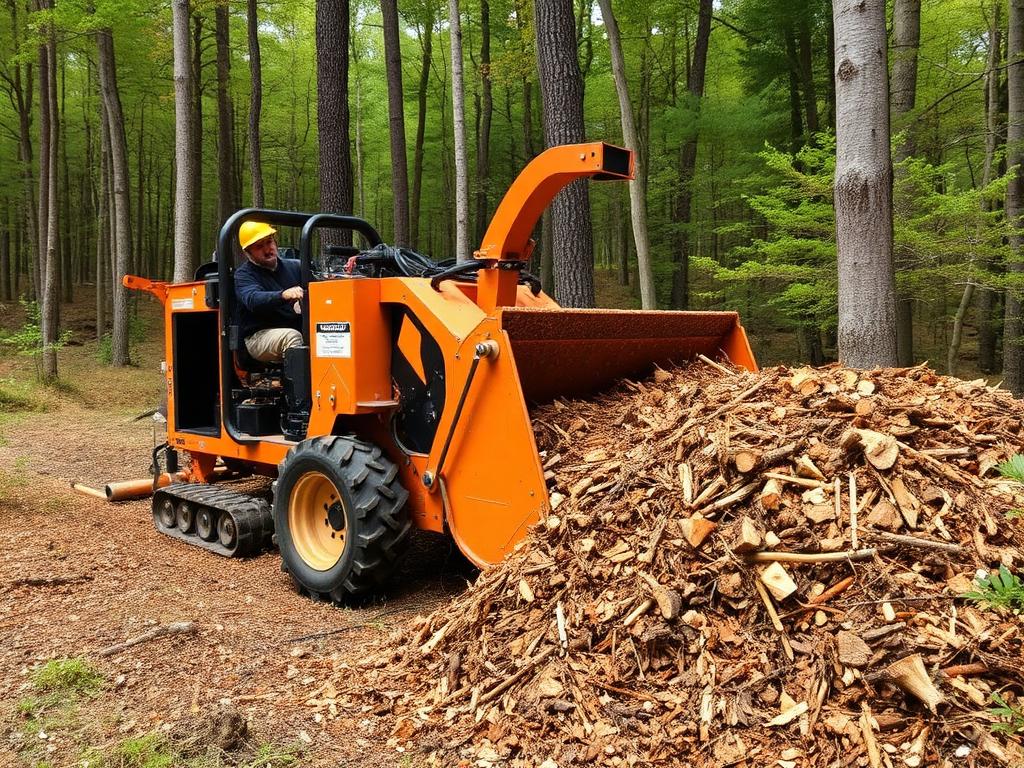
What Is Forestry Mulching?
Forestry mulching is a one-machine land-clearing method. A tracked or skid-steer mulcher grinds standing brush, saplings, and small trees into fine mulch — leaving a clean, walkable surface with no burn piles, no hauling, and minimal soil disturbance.
Compared to traditional land clearing (cut, haul, burn, grade), mulching is faster, cleaner, and often cheaper — especially on sloped or wet terrain where hauling debris is expensive or impossible.
The mulch left behind suppresses regrowth, reduces erosion, and improves soil health. It is ideal for view cuts, trail creation, pasture reclamation, site prep, and invasive species control across the North Country.
What Affects Forestry Mulching Cost Per Acre?
Vegetation Density
Light grass and saplings process fast. Heavy stands of 4–8 inch trees require more time and fuel per acre.
Terrain & Slope
Flat, dry ground is fastest. Steep hills, wet areas, and rocky terrain slow the machine and increase wear.
Access & Mobilization
Remote properties or tight entryways add transport and setup time. Sites near Littleton or Lancaster cost less to reach.
Total Acreage
Larger jobs often lower the per-acre rate because mobilization is spread across more land. Small jobs (under 1 acre) have a higher minimum.
Tree Size & Species
Softwood saplings mulch quickly. Hardwood, dense cedar, or multi-stem invasives like knotweed take more passes.
Desired Finish
A rough chop for site prep is faster than a polished finish for pasture or recreational trails.
Forestry Mulching Costs in Northern NH & VT
Land conditions in the North Country are different from southern New England. Our shorter growing season, rocky glacial till, and steep terrain mean mulching machines work harder per acre than on flat farmland — but the results last longer because regrowth is slower.
In Coos, Grafton, and Carroll Counties, most residential mulching jobs fall in the $1,200–$2,200 per-acre range. Large commercial or agricultural plots (10+ acres) often see rates closer to $1,000–$1,500 per acre once mobilization is amortized.
The Northeast Kingdom of Vermont — Caledonia, Essex, and Orleans Counties — sees similar pricing, with slightly higher transport costs for remote border towns. Winter work is possible on frozen ground and can be more affordable since demand is lower.
Mulching vs. Traditional Land Clearing
| Factor | Forestry Mulching | Cut & Haul / Burn |
|---|---|---|
| Labor & Equipment | One machine, one operator | Chainsaws, loaders, trucks, multiple crew |
| Debris Disposal | None — mulch stays on-site | Hauling or burn permit required |
| Soil Impact | Minimal — mulch protects topsoil | Higher risk of compaction / erosion |
| Slope Work | Excellent — tracked machines grip hills | Limited by loader / truck access |
| Permits Needed | Usually none for brush / saplings | Burn permits, hauling permits possible |
| Timeline | Same day for 1–3 acres | Days to weeks depending on haul |
Get Your Exact Cost — Free Estimate
Every property is different. The only way to know your forestry mulching cost per acre is an on-site walkthrough. We will look at your terrain, vegetation, and access — then give you a firm quote with no hidden fees.
Serving Littleton, Lancaster, Berlin, Colebrook, St. Johnsbury & all of Northern NH / VT
Common Questions About Mulching Costs
Is there a minimum job size?
Yes — most contractors have a half-day or full-day minimum. For NEPS, that typically translates to jobs starting around $800–$1,200 depending on location. It is often more cost-effective to combine multiple areas or add adjacent clearing.
Does winter mulching cost less?
Sometimes. Frozen ground can make access easier in wet areas, and winter scheduling often has more availability. However, extreme cold or snow can slow the machine. Ask about seasonal rates when you call.
Do I need a permit for forestry mulching?
In most of NH and VT, no permit is required for mulching brush and small trees on private land. If you are in a wetland buffer or Conservation Reserve Program (CRP) land, check local rules first. We can help you verify.
How long does 1 acre take to mulch?
Light brush: 2–4 hours. Moderate density: 4–8 hours. Heavy timber: a full day or more. Terrain, weather, and access all affect speed. We will give you a time estimate with your quote.
What happens to the mulch?
It decomposes into the topsoil over 1–3 years, enriching the ground and suppressing weeds. If you need the material removed for a building pad or finished lawn, that is a separate service and will be quoted separately.
Ready to move earth?
Serving Coos, Grafton, and Carroll Counties in NH & the Northeast Kingdom of VT.